This programme follows the Cambridge Assessment International Education (CIE) curriculum — a world-recognised standard trusted by top universities globally.
Early Years Foundation Stage (EYFS)
The TOWIS Learning Journey
From Age 3 to IGCSE — Phases, Subjects, Milestones & the ACE Approach
Academic Year 2026–2027 | Cambridge International Centre BU001 Yangon | Principal: Mr. Jarlath Madine
The TOWIS Promise — What Every Family Can Expect
At TOWIS, every student — from a three-year-old taking their first steps into school to a sixteen-year-old sitting Cambridge IGCSE — is on the same journey: to become the best version of themselves, academically and as a person. That journey never stops, and no child is ever taught to a ceiling.
We measure success not against other students, but against each child’s own potential, established through Quest standardised cognitive assessments. Our ambition is simple: every student meets the expected standard (Green), most go beyond it (Sky Blue), and some will astonish everyone — including themselves (Space Blue). A positive attitude to life and learning, built through the ACE approach, is what makes the difference between a good education and an extraordinary one.
We know that not every student will achieve A* in every subject — and we are honest about that. What we do expect — and what we hold ourselves accountable to — is that every student achieves more than their ability baseline predicted. That is the TOWIS standard: not the grade on the page, but the growth behind it.
|
A
Academic Excellence |
Deep knowledge and skills built progressively — from play-based discovery in EYFS to Cambridge IGCSE mastery in Year 11. Every lesson, every year, every student is challenged to go further. |
|
C
Character Development |
Resilience, curiosity, responsibility, and empathy — the qualities that outlast any examination result. A positive attitude to life and learning is not a nice extra at TOWIS. It is the engine of everything. |
| E Engagement | Active, joyful, purposeful learning in every lesson, every year — because children and young people who love learning achieve more. Engagement is not compliance. It is curiosity in action. |
Your child's homeroom teacher — your most important relationship at TOWIS
Your child's homeroom teacher is not just their class teacher — they are their key person, their daily champion, and your primary point of contact for everything: academic progress, wellbeing, friendships, concerns, and celebrations. We ask every family to build a strong, trusting relationship with their child's homeroom teacher from day one.
When parents and homeroom teachers work together openly and regularly, children thrive. If something changes at home, if your child seems worried, or if you have any question about their learning — your homeroom teacher is always your first call. He or she is the link between school and home, and the person who knows your child best.
The Cambridge Pathway — A Clear Path from Age 3 to 19
TOWIS delivers the Cambridge Pathway — one of the most respected and widely recognised educational frameworks in the world. The Cambridge Pathway provides five stages of education, leading seamlessly from Early Years through Primary, Lower Secondary, Upper Secondary, and on to Advanced level (A Levels / IB). Each stage builds directly on the previous one, deepening knowledge, understanding, and skill in a coherent, progressive sequence that prepares learners not just for examinations, but for university, career, and life.
Cambridge Early Years
Age 3+
A play-based programme with holistic curriculum, engaging resources, and support to measure progress. 6 curriculum areas including Personal, Social and Emotional Development.
Cambridge Primary
Age 5+
Clear, adaptable curriculum. Flexible assessment options. Support and resources. Insight to understand potential. 10+ subjects including English, Mathematics and Science.
Cambridge Lower Secondary
Age 11+
Clear, adaptable curriculum. Flexible assessment options. Support and resources. Insight to predict performance. 10+ subjects including English, Mathematics and Science.
Cambridge Upper Secondary
Age 14+
Broad, adaptable curriculum. Fair, valid, reliable assessment. Cambridge IGCSE: 70+ subjects. Cambridge O Level: 40+ subjects. Cambridge ICE.
Cambridge Advanced
Age 16+
In-depth, adaptable curriculum. Fair, valid, reliable assessment. Cambridge AS & A Level: 50+ subjects. Cambridge AICE. Cambridge IPQ.
At TOWIS, we currently offer Cambridge Early Years, Cambridge Primary, Cambridge Lower Secondary, and Cambridge Upper Secondary (IGCSE). Our students therefore follow a coherent, unbroken Cambridge pathway from age 3 through to IGCSE at age 16. Every stage prepares students specifically for the next — so a child joining TOWIS at three years old, progressing through every phase, arrives at their Cambridge IGCSE examinations with thirteen years of progressively deepening knowledge, skill, and understanding behind them.
Cambridge qualifications are trusted by schools, universities, and employers in over 160 countries. Every TOWIS student — whatever their background or starting point — is on a pathway that is recognised, respected, and valued worldwide.
Early Years Foundation Stage
EYFS 1 & EYFS 2 Ages 3–5 Nursery & Reception
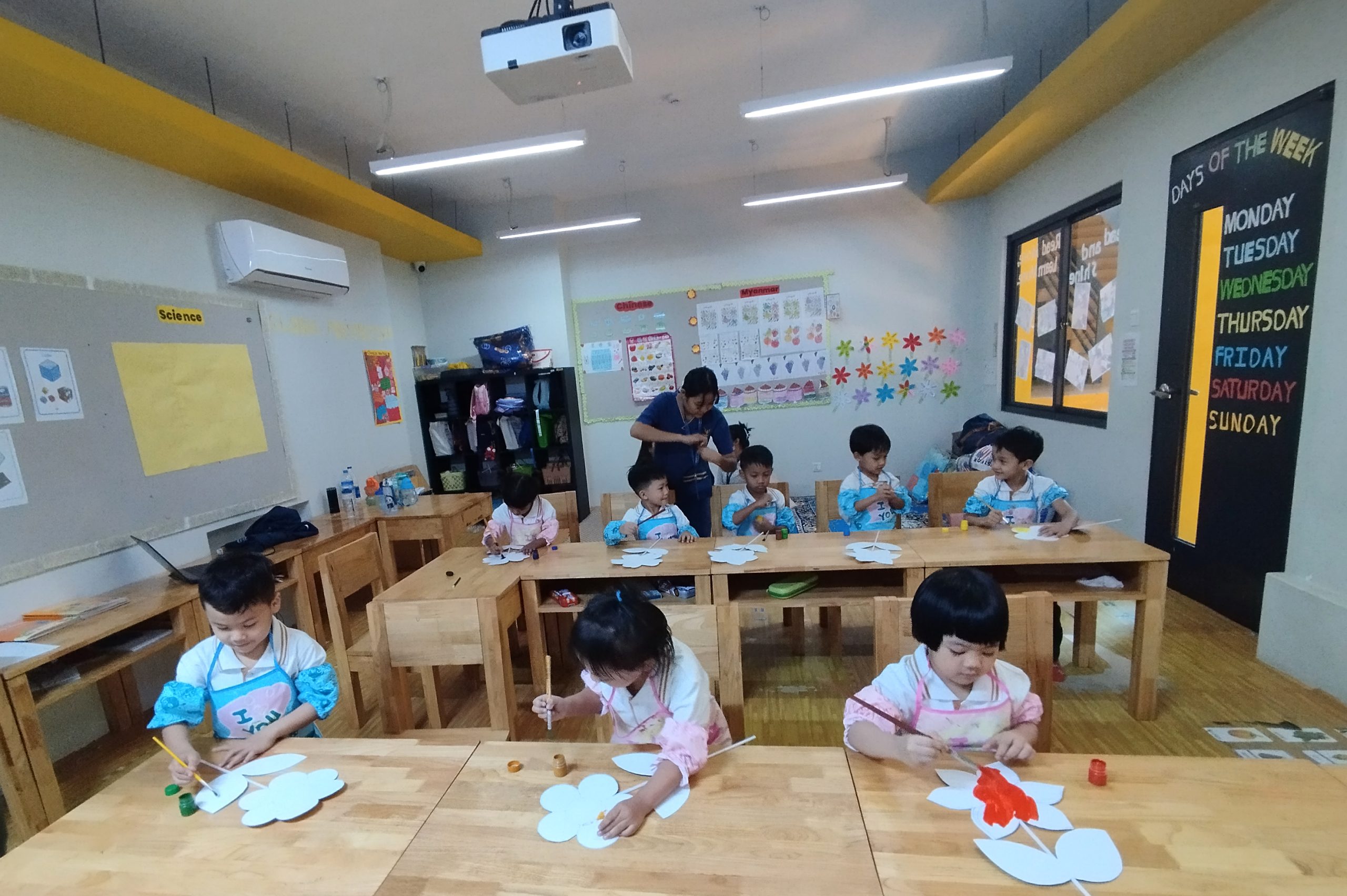
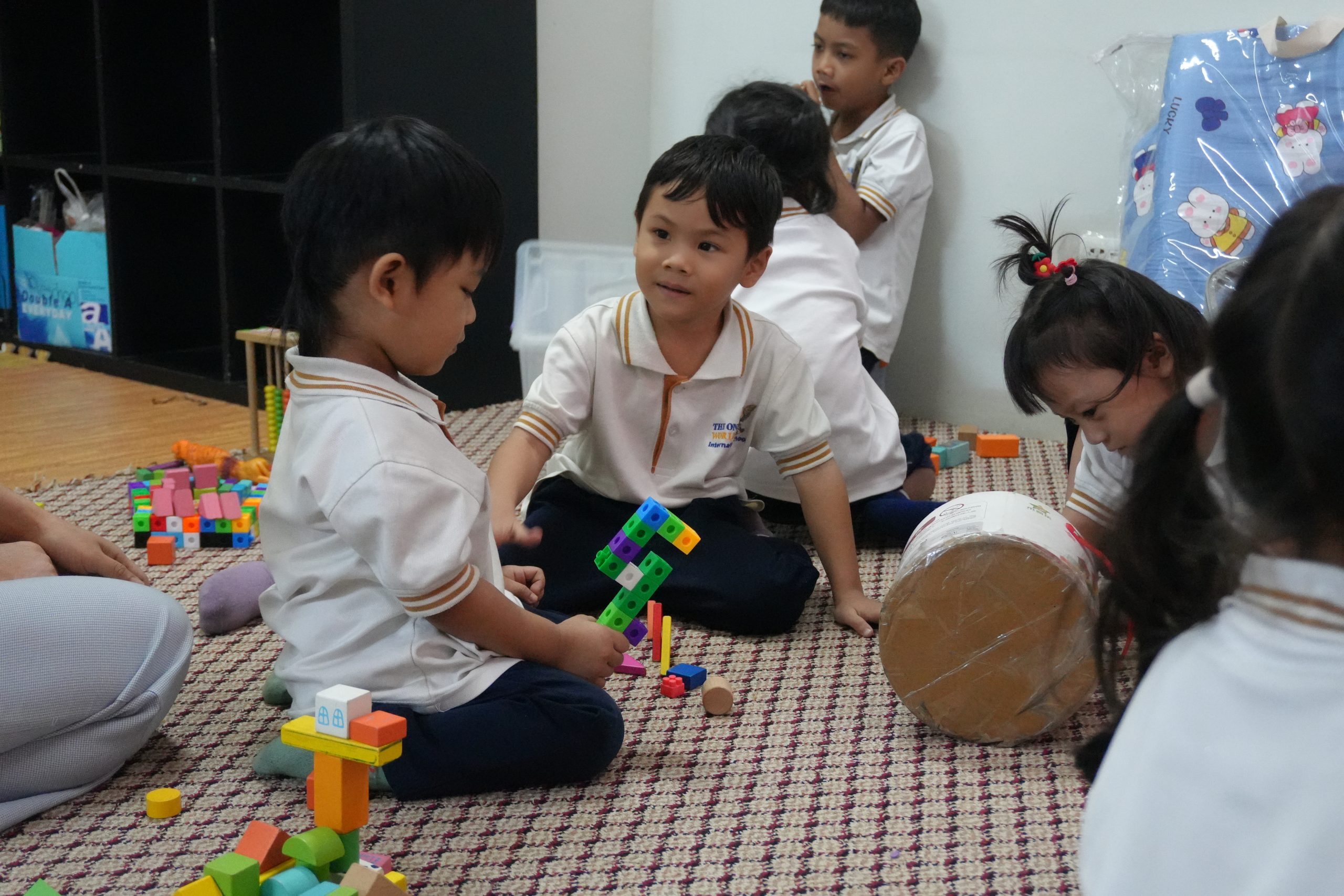
This is where it all begins. In EYFS, we are not rushing children towards academic targets — we are building the foundations on which everything else stands. Children at this stage learn through play, exploration, and loving relationships with trusted adults. Every song, every story, every question answered with genuine curiosity plants a seed that will grow for the next twelve years.
Our most important task at this stage is not teaching the alphabet — it is helping children fall in love with coming to school. When a child feels safe, seen, and joyful, they learn. That is the ACE philosophy in its purest form: academic foundations built inside a culture of warmth, wonder, and high expectations.
Your child's EYFS homeroom teacher is their key person — the adult they bond with first, the one who learns how your child ticks, what makes them laugh, what excites them, and what they find hard. Research is unambiguous: the quality of the relationship between a young child and their key adult is the single greatest predictor of early learning. We invest in it deliberately, and we ask families to do the same.
Seven Areas of Learning — EYFS Curriculum
- Communication, Language & Literacy
- Mathematics (Early Numeracy)
- Personal, Social & Emotional Development
- Physical Development
- Understanding the World
- Expressive Arts & Design
- Myanmar Language
Key Milestones — By the End of EYFS
- Recognises all letters of the alphabet; beginning Phase 2 phonics; reads simple decodable words
- Writes own name and simple words; forms letters correctly with a pencil
- Counts reliably to 20; understands more and less; adds and subtracts with objects
- Speaks confidently in sentences; listens to and retells simple stories
- Manages own feelings; plays cooperatively with others; shows kindness
- Curious about the natural world; asks why and how; makes simple observations
There is no such thing as a child 'too young to learn'. There is only a child not yet met where they are. In EYFS, meeting every child where they are — and then stretching them gently, joyfully, further — is the entire job.